
Shree Ganesh Chaturthi: Significance, Puja Vidhi, Benefits & Spiritual Meaning
Published on in Vedic Spiritual Insights
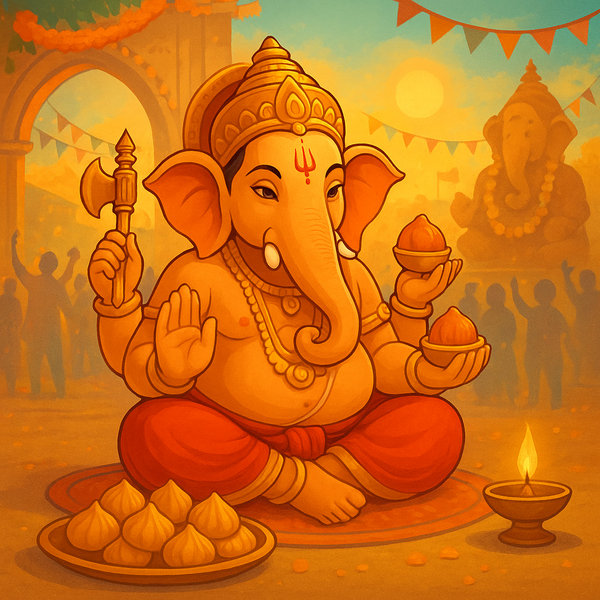
Ganesh Chaturthi: The Festival of New Beginnings and Joy
When you walk through the streets of Mumbai or Pune in late August or early September, you might hear the rhythmic beats of drums, smell fresh flowers and sweets in the air, and see beautifully decorated statues of an elephant-headed deity. This is Ganesh Chaturthi – one of India’s most loved and vibrant festivals.
Who is Lord Ganesha?
Lord Ganesha, with his elephant head and pot-belly, is one of the most recognizable and adored deities in Hindu tradition. He is known as the Remover of Obstacles, the God of Wisdom, and the Lord of New Beginnings.
-
Students pray to him before exams.
-
Entrepreneurs worship him before starting a business.
-
Families invoke his blessings before weddings and housewarmings.
In short: if you’re about to start something important, you want Ganesha on your side!
Why is Ganesh Chaturthi Celebrated?
According to Hindu mythology, Ganesh Chaturthi marks the birth of Lord Ganesha. The celebration goes back thousands of years, but it became a public festival in the 19th century when freedom fighter Lokmanya Tilak used it to unite people against colonial rule.
Today, it’s not only a religious celebration but also a cultural festival that brings communities together.
How is it Celebrated?
The festival usually lasts 10 days. Here’s what typically happens:
-
Installation of the idol – Families or communities bring home or set up a clay idol of Lord Ganesha.
-
Daily prayers and offerings – Devotees sing hymns, perform rituals, and offer sweets (especially modak, a dumpling filled with coconut and jaggery, said to be Ganesha’s favorite).
-
Social gatherings – The festival is filled with dance, music, theater, and art, creating an atmosphere of joy and connection.
-
Visarjan (immersion) – On the final day, the idol is taken in a grand procession with chants of “Ganapati Bappa Morya!” and immersed in water, symbolizing Ganesha’s return to the cosmic universe.
What Does It Mean Spiritually?
For Hindus, the immersion is a reminder of life’s impermanence: everything that is born must eventually dissolve. The festival teaches us:
-
Let go of ego and obstacles.
-
Celebrate beginnings with gratitude.
-
Come together as a community.
What Can the World Learn from Ganesh Chaturthi?
Even if you’re not Hindu, Ganesh Chaturthi carries universal messages:
-
Believe in fresh starts.
-
Remove mental and emotional blockages.
-
Balance wisdom with joy.
-
Respect nature (today many communities use eco-friendly clay idols).
Conclusion
Ganesh Chaturthi is more than a religious ritual – it’s a festival of hope, unity, wisdom, and joy. Whether you chant ancient Sanskrit hymns, taste a sweet modak, or simply witness the vibrant celebrations, the spirit of Ganesha reminds us:
👉 Every ending is just a new beginning.
Related Products




More Articles


